But what does this mean specifically for medical students?
The coming generation of physicians will need to master not only the practice of medicine but also the confident command of digital systems. This includes:
- critically evaluating AI-generated recommendations,
- a fundamental understanding of data quality, bias, and algorithms,
- and the ability to meaningfully integrate technology into the physician-patient dialogue while always remaining human.
The role of the physician is changing: shifting from being merely a source of information to serving as a guide within the interplay of medical knowledge, data, and patient-centered decision-making.
And then there is the ePA.
It is regarded as a central pillar of digitalization in Germany. But how far have we truly come? How widespread is its usage? How interoperable are the data? And to what extent does it actually streamline the day-to-day realities of healthcare provision? Here, too, the Federal Minister of Health failed to truly bring us along. Somehow, the situation remains suspended somewhere between “things are going quite well with the ePA” and “there is still room for innovation.”We must ask just as honestly:
How truly digital are German medical practices today? Often, worlds separate state-of-the-art practice management systems from information still transmitted via fax. Infrastructure, training, a lack of time, and user acceptance determine whether innovation actually takes hold in everyday practice—or remains merely a display piece at a trade fair booth.
Another key point: Health literacy. As patients gain greater access to digital tools, apps, and health data, the ability to correctly interpret this information becomes increasingly vital—and this applies to both sides of the examination room.
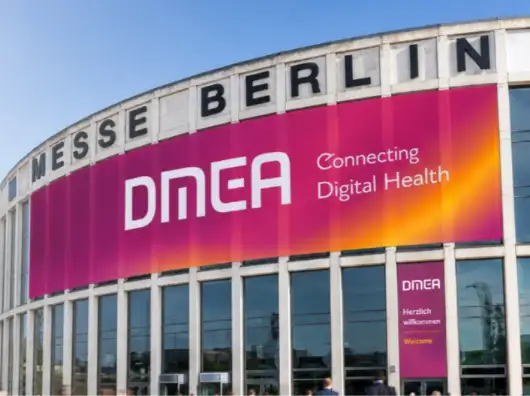
DMEA demonstrated impressively: The future of medicine is digital. Now, the task is to shape that future in a way that is realistic, practical, and human—and to bring everyone along on the journey: students, medical practices, hospitals, and patients alike.